Comments Off on What are the facts on insecticides?
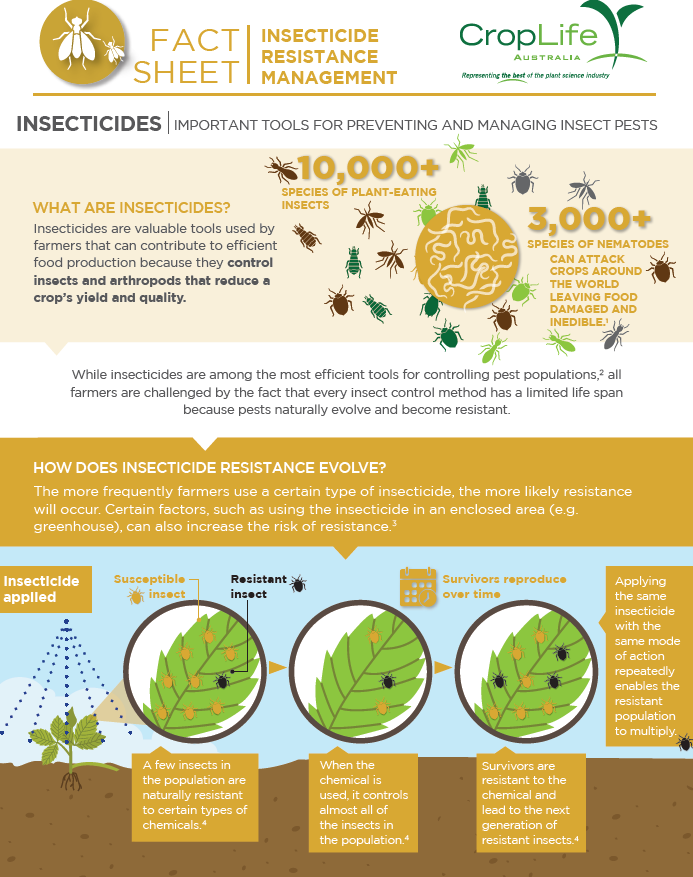
Insecticides are valuable tools used by farmers that can contribute to efficient food production because they control insects and arthropods that reduce a crop’s yield and quality.
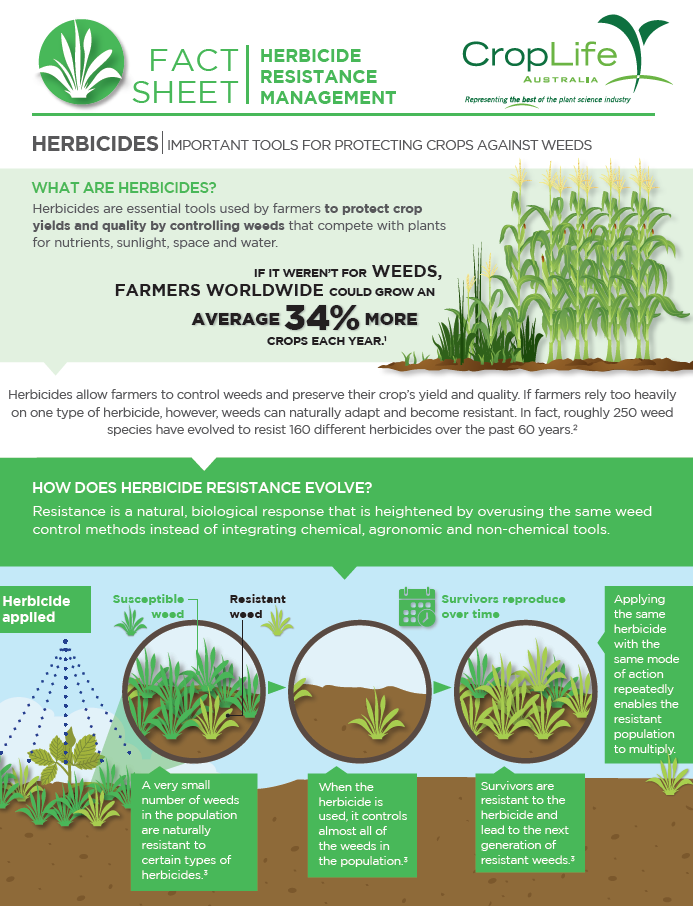
Herbicides are essential tools used by farmers to protect crop yields and quality by controlling weeds that compete with plants for nutrients, sunlight, space and water.
Comments Off on Agsafe’s drumMUSTER stewardship program celebrates a 30 million milestone
15 August 2017 (Canberra) – CropLife Australia congratulates Agsafe on the great success of its drumMUSTER stewardship program, which today celebrates a record landmark achievement, with the collection of its 30-millionth chemical container for recycling.
Agsafe, CropLife Australia’s stewardship organisation, first launched its end-of-life product container recycling program drumMUSTER 18 years ago, to assist farmers and ensure chemical containers were not stored on-farm, sent to landfill, buried or burnt.
Matthew Cossey, Chief Executive Officer of CropLife Australia said “The collection of the 30 millionth container is a significant and important milestone and testament to the commitment of world-leading stewardship initiatives by Australia’s crop protection product industry. The effort and dedication of the Agsafe team has ensured that 35,000 tonnes of materials have avoided landfill, and instead have been transformed into new products.”
“The program plays an important role in our industry’s whole-of-life-cycle approach to product stewardship. Collecting eligible empty and clean agricultural chemical containers from participating manufacturers provides agricultural chemical users with the tools to dispose of containers safely and sustainably. It also highlights and reinforces how important it is that farmers purchase products that are participating in the drumMUSTER program.”
“DrumMUSTER is today Australia’s longest running agricultural waste management program, with 814 collection sites operated by 360 councils and 142 other community-based collection agencies nationwide.”
“CropLife Australia members contribute millions of dollars annually in industry stewardship activities including Agsafe’s drumMUSTER, ChemClear® and Accreditation and Training programs. Agsafe’s programs were established and initially funded by CropLife member companies to ensure the highest standards of safety and environmental stewardship of the industry’s products. This is something CropLife and our members take great pride in and remain committed too.”
“The purpose of end-of-life-cycle industry stewardship programs such as these is to ensure that users of agricultural chemicals have available to them vital tools to improve the environmental sustainability of Australian agriculture,” Mr Cossey concluded.
Comments Off on Parkinson’s disease and pesticide Australia: ‘It’s important not to mislead the public based on an untested correlation’
Chief Executive Officer of CropLife Australia, Mr Matthew Cossey, is of the opinion that safety of crop protection product use and human health are the topmost priority of the plant science industry. He said that crop protection products undergo extensive research and development, as well as exhaustive registration procedures, to ensure the products used are safe.
Comments Off on Better disposal rules needed, says Victorian Farmers Federation Grains Group
CropLife chief executive Matthew Cossey said there was no need for the larger containers to enter the drumMUSTER program, because most manufacturers offer a return policy at the point of sale and a new system would be costly. He said CropLife members were required to participate in drumMUSTER and offer a recycling program for IBCs however he called for manufacturers which refuse to offer a recycling program to be fined. “There should be some penalties in place for companies that don’t participate in program such as drumMUSTER … those that don’t arrange for whole-of-life cycle stewardship,” Mr Cossey said.
Comments Off on Celebrating sixty years of advocacy and achievement of the plant science industry
Today, CropLife Australia marks sixty years of advocacy and achievement, representing the best of the plant science sector as its peak industry organisation.
“It was on this day in 1955 that CropLife Australia officially commenced as the Association for Agricultural Chemical Manufacturers of Australia and has continually operated since then as the peak organisation for the plant science industry,” said Lachlan McKinnon, President of the Board of CropLife Australia.
“It marks sixty years of CropLife Australia acting as a strong voice for the plant science sector, for farmers and for the nation’s agricultural sector.”
“It is an appropriate time to reflect on the significant contribution to Australia’s agricultural sector that CropLife Australia and its members have made through advocacy and world-class industry stewardship.”
“The plant science industry underpins more than $18 billion of agricultural production for the Australian economy, employs thousands of people across the country, and plays a crucial role in the productivity, sustainability and food security of Australia’s farming sector.”
“CropLife’s member companies have continued to be at the forefront of innovation in modern agriculture and have expanded to include agriculture biotechnologies such as genetically modified (GM) crops. Australian farmers have embraced these new innovations for their well-established environmental and productivity benefits.”
“The work of CropLife is crucial because of how important our member companies’ work is to the nation’s farmers. CropLife has a tradition of constructively working with both sides of politics and federal and state levels to ensure our industry is able to continue to support Australia’s farming effort.”
“CropLife has always advocated for independent, scientific evidence-based regulation. This advocacy has earned CropLife its place as a trusted partner, working collaboratively across the agriculture industry to help deliver good public policy initiatives and regulatory environments.”
“CropLife Australia’s members have always shown a genuine commitment to thought leadership and industry stewardship, contributing millions of dollars each year to world-class whole-of-lifecycle industry stewardship programs to ensure the highest standards of safety and environmental stewardship of our industry’s products.”
“CropLife members originally established and funded the highly successful stewardship initiatives of the drumMUSTER and ChemClear programs. Our Resistance Management Strategies and the Pollinator Protection Initiative, which includes the internationally recognised, world-first smart phone app BeeConnected, are examples of this ongoing commitment.”
“With a rapidly growing world population, limited arable land and a changing climate, the importance of the plant science industry will only increase as Australian farmers position themselves to meet these challenges and take advantage of the opportunities, equipped and assisted by the innovations in modern agriculture.”
“It is undeniable that what is good for farmers is good for the nation. That’s why CropLife Australia has proudly represented the innovators, developers, manufacturers, formulators and registrants of crop protection and ag biotechnology products in the plant science industry for sixty years as they help farmers sustainably produce affordable, high quality food, feed and fibre for the world.“
Comments Off on Agvet Amendment Bill will improve efficiency while protecting human health
Monday 14 July 2014 (Canberra) – An efficient regulatory system that protects human health and safety will be maintained in Australia with the passage of a Bill that removes unnecessary re‑registration and re‑approval of agricultural chemicals.
“It is pleasing to see both the government and the opposition put party politics aside to provide an appropriate regulatory system for the registration and review of agricultural chemicals,” said Matthew Cossey, Chief Executive Officer of CropLife Australia. “Improving the efficiency of the regulator will ensure that Australian farmers have greater access to the latest, most effective and safest crop protection products.
“The Australian Pesticides and Veterinary Medicines Authority (APVMA) has responsibility to ensure that agricultural and veterinary chemicals are safe for users, the environment and consumers of Australian produce. Re-approval and re-registration would have duplicated the existing Chemical Review Program, increasing red tape and unnecessarily reducing access to products for Australian farmers, while resulting in worse health, safety and environmental outcomes.
“The passing of the Agricultural and Veterinary Chemicals Legislation Amendment (Removing Re‑approval and Re‑registration) Bill 2014 (the Bill) in the Senate today means that the primacy of protecting human health and the environment is maintained and arbitrary time-based reviews will not undermine Australia achieving an efficient and effective regulator.
The Amendment Bill passed through the House of Representatives and the Senate with the support of the Federal Government and the Opposition.
“The previous government began the much needed task of efficiency reform of agricultural and veterinary chemical regulation in Australia. Unfortunately, including re-registration and re-approval imposed a regulation that would have been costly and unnecessary.”
“Agriculture Minister Barnaby Joyce delivered on the Coalitions election promise by bringing this Bill to the Parliament and Shadow Agriculture Minister the Hon Joel Fitzgibbon has shown a bipartisan commitment to agriculture and Australia’s farmers by supporting the Bill.
“The agriculture industry should find encouragement in having a Minister and Shadow Minister who are able to put party politics aside for the sake of supporting the Australian farming sector.”
According to a Deloitte Access Economics report released by CropLife Australia last year, 68 per cent of the total value of Australian crop production, or $17.6 billion of Australian agricultural output, can be attributed to the use of crop protection products.
“The agricultural chemical sector creates 9,250 full time equivalent jobs across Australia and makes multiple contributions to the economy in areas including exports, manufacturing and trade,” continued Mr Cossey.
“It is crucial for Australia’s farming sector that the regulatory system protects human health and the environment without adding unnecessary and untargeted processes. The Bill that has passed through Parliament is a big step in the right direction towards more efficient and effective agricultural and veterinary chemical regulation.”
“Now the obligation is on the regulator to also deliver efficiencies in its operations,” concluded Mr Cossey.
Comments Off on Agriculture needs industry specific regulator
Thursday 1 May 2014 (Canberra) – The proposal in the National Commission of Audit Report released today to merge the Australian Pesticides and Veterinary Medicines Authority (APVMA) and the National Industrial Chemicals Notification and Assessment Scheme (NICNAS) and place it in the Industry portfolio will do nothing to improve performance and may serve to cloak the real inefficiencies.
“The Australian Government is to be commended for its commitment to improve efficiency and effectiveness of government services and policy advice and we welcome the report from the National Commission of Audit. It’s important however that the solutions target the real problems and structural reform of NICNAS and the APVMA through consolidation will only serve to conceal the administrative and management inefficiencies that exist,” said Matthew Cossey, Chief Executive Officer of CropLife Australia.
“Under no circumstances should an agricultural industry regulator be placed in the Industry portfolio. The Department of Industry has shown complete inability to drive any level of reform in chemical regulation over the last few years and NICNAS’ operations have been affected by this failure. In contrast, the APVMA is in the midst of a reform that is about delivering more efficient and effective services, which will mean all that work would be undone.
“It is crucial that the core regulator for Australia’s agricultural and farming sector remains in the Agriculture portfolio,” Mr Cossey said. “Moving a new amalgamated body from the Agriculture portfolio to the Industry portfolio poses a threat to the competitiveness of Australia’s agricultural industry as it would further undermine the APVMA’s purpose, which is to regulate the use of agricultural chemicals and veterinary medicines.”
A 2008 Productivity Commission Research Report on Chemicals and Plastics Regulation assessed the possibility of consolidating chemical assessment regimes including the full amalgamation of NICNAS and the APVMA. It concluded that the disadvantages of consolidation outweighed the benefits and would put into jeopardy some of the APVMA’s world-class risk-management functions.
“CropLife’s view is that NICNAS is not required as a regulatory body as its functions could be easily transferred to more appropriate bodies such as the ACCC and the Department of Health. This is in line with the recommendations of the Productivity Commission Research Report. It seems that the Commission of Audit has failed to recognise these previous recommendations,” said Mr Cossey.
“Chemicals regulators in different industries and sectors have distinct requirements, priorities and skills, but cooperate with the APVMA in the regulation of agricultural and veterinary chemicals. Merging two inefficient regulators does not create one efficient regulator and an amalgamation of NICNAS and the APVMA would create a hybrid regulator with disparate powers, different risk assessment and without a clear purpose.
“It’s important to Australia’s agricultural sector and future competitiveness and productivity that its regulator is able to give priority to agricultural considerations. The APVMA does need to reform its administrative and management functions to improve efficiencies however, amalgamating it with NICNAS and transferring it to the Industry Portfolio will not solve these problems.
“I encourage the government to consider the Productivity Commission Research Report as it still provides the roadmap for the appropriate regulatory reform in the agricultural sector and its recommendations should be implemented before any other reform is undertaken,” said Mr Cossey.
Comments Off on Amendments bring ag chemical regulation closer to common sense
Thursday 19 December 2013 (Canberra) – Today’s federal government consultation paper on amendments to the Agricultural and Veterinary Chemicals Code demonstrates a genuine commitment to improving efficiency in regulation of the agriculture sector, without compromising human health, safety or environmental outcomes.
“Minister Joyce should be commended for acting so swiftly to implement the government’s election commitments in this area,” said Matthew Cossey, Chief Executive Officer of CropLife Australia, today.
“Although we acknowledge that the APVMA is currently carrying out its own regulatory reform process, the government’s amendments to the code will better enable farmers to access the tools they need to farm productively and sustainably. It is absolutely vital that agchem regulation is commensurate with risk as the costs of unnecessary regulation are unfairly borne by farmers and consumers.
“An inefficient regulator is a problem for protecting human health and the environment, as well as for agricultural productivity. The government’s proposed amendments remove a number of unnecessary processes and duplication, which will allow the APVMA to respond more promptly to address areas of actual risk.
“The recently released ABARES Review of Selected Regulatory Burdens on Agriculture and Forestry Businesses confirms the importance of the amendments proposed in the government’s consultation paper today. ABARES has highlighted the need for an efficient regulator and a regulatory framework that does not create unnecessary cost burdens that will stifle innovation.
“It is vital that any regulation in this space facilitates farmers’ access to targeted, safe and effective chemistry. According to a Deloitte Access Economics report released by CropLife Australia last month, 68 per cent of the total value of Australian crop production, or $17.6 billion of Australian agricultural output, can be attributed to the use of crop protection products.
“The agricultural chemical sector creates 9,250 full time equivalent jobs across Australia and makes multiple contributions to the economy in areas including exports, manufacturing and trade.
“It is crucial for the crop protection industry and the farmers, workers and communities it supports that the regulatory system protects human health and the environment without adding unnecessary and untargeted processes. The amendments proposed in today’s consultation paper are a step in the right direction.
“The consultation paper prioritises the protection of human health and the environment, and it is clear that the proposed amendments will serve to enhance the efficiency of processes aimed at protecting workers, communities and the environment,” concluded Mr Cossey.
Contact: Jessica Lee (Manager – Public Affairs) Ph: 02 6230 6399 Mob: 0410 491 261
Comments Off on Product Stewardship Voluntary Accreditation Framework
CropLife Australia (CropLife) considers that a successful scheme for accrediting product stewardship arrangements should provide sufficient incentive to encourage existing, successful schemes to participate in the program. CropLife is concerned that the proposed structure and assessment processes for voluntary accreditation do not achieve this aim. Instead, schemes that may seek voluntary accreditation may be subject to an assessment process that substantially duplicates other areas of government regulation, is unnecessarily expensive and inflexible. Collectively, these measures would result in a significant disincentive for both current and new stewardship schemes to seek voluntary accreditation.
CropLife has identified a series of issues and made recommendations for changes to ensure that the incentive for stewardship schemes to seek accreditation is maximised.